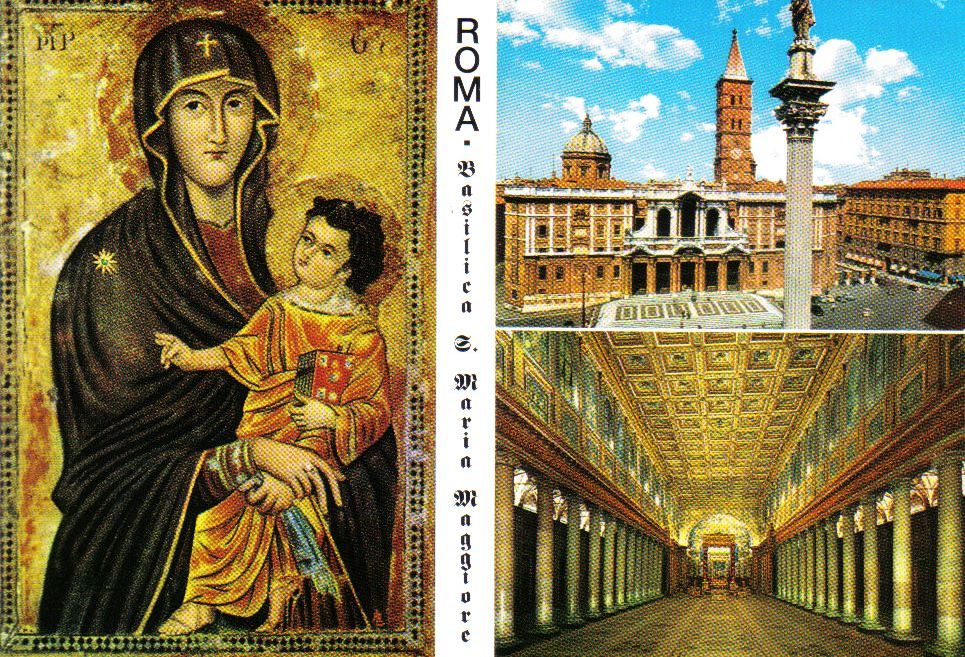
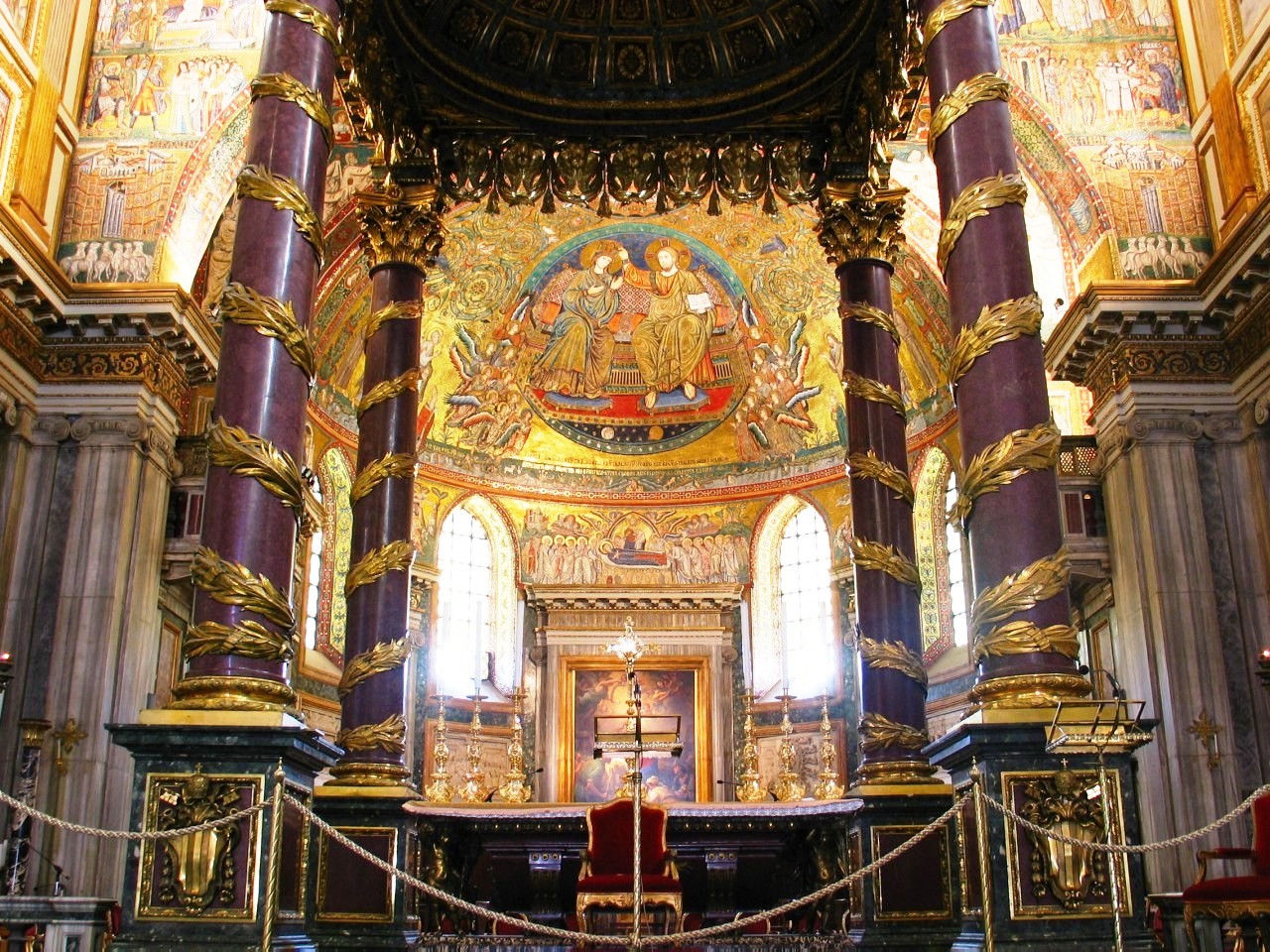
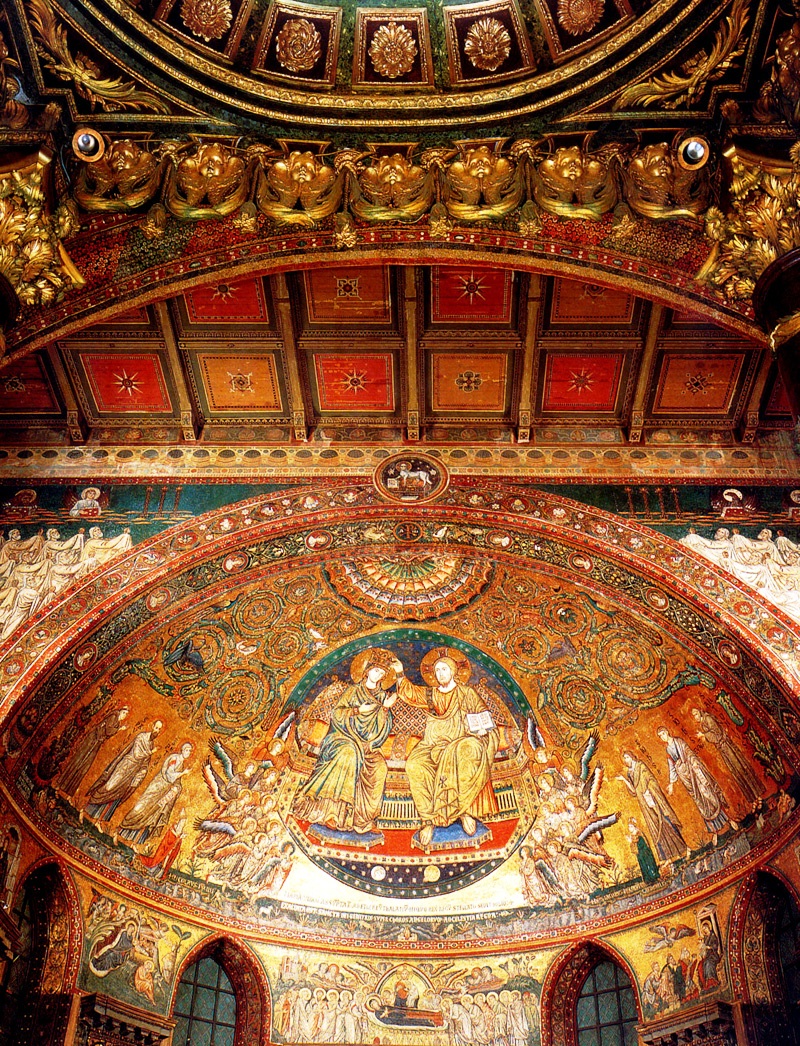
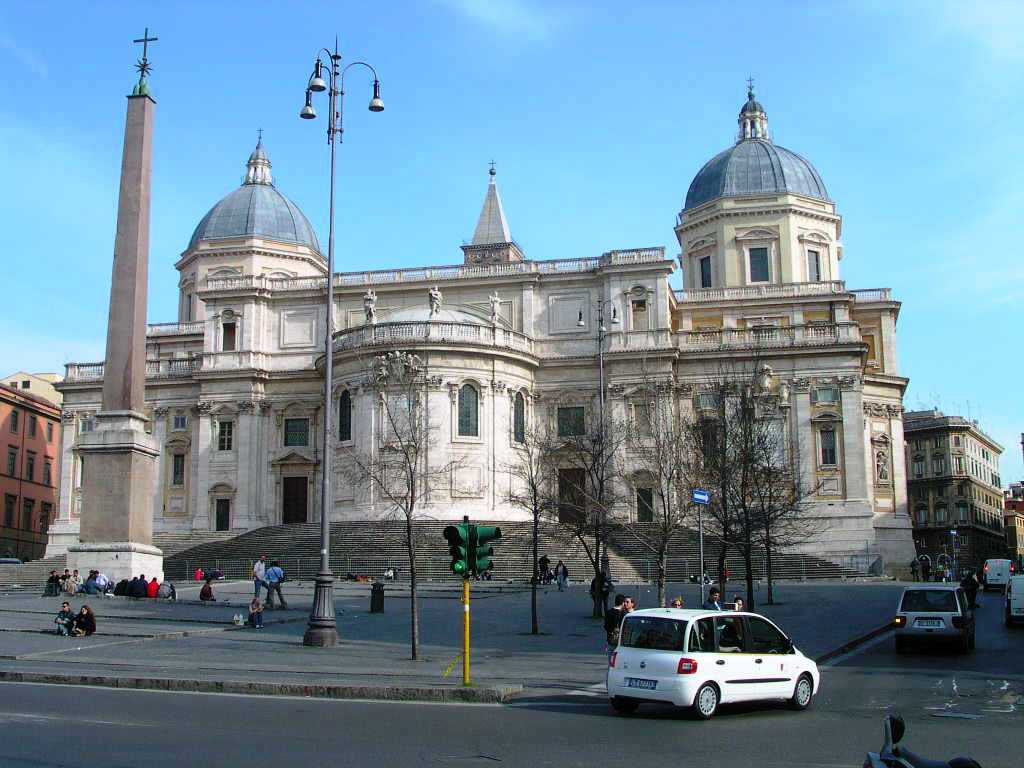
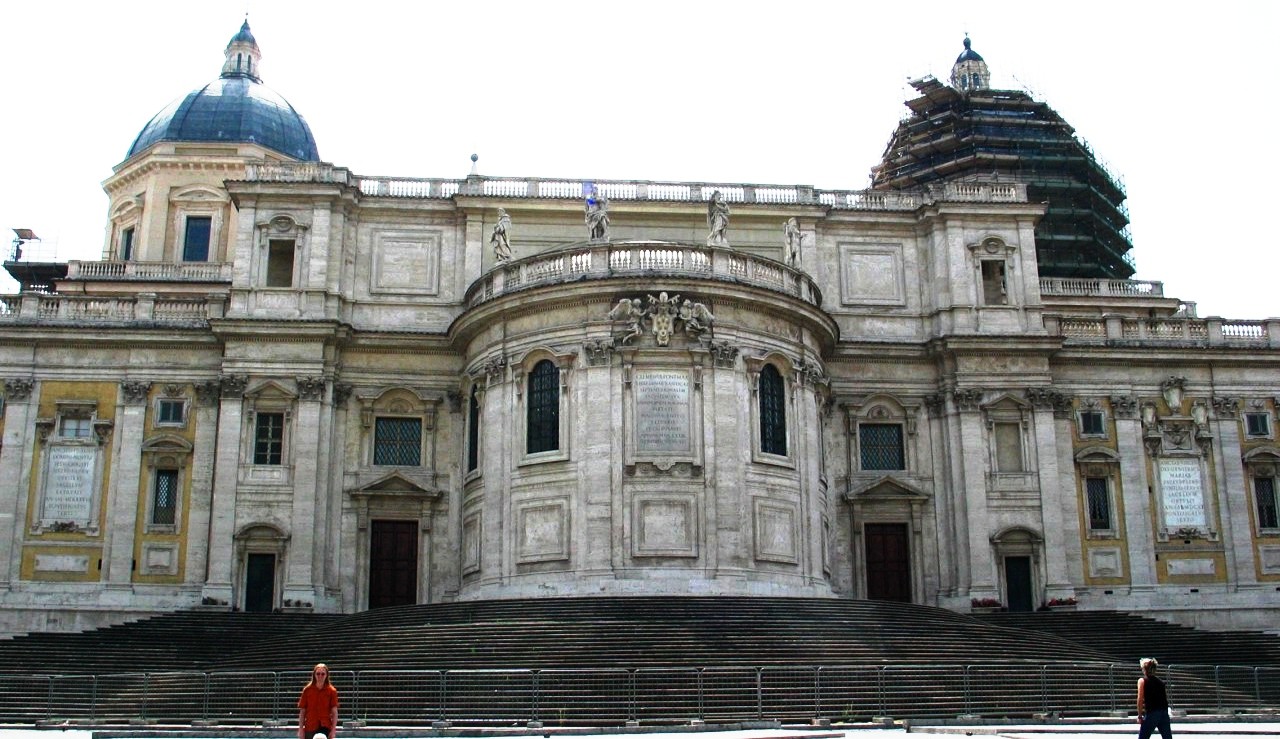
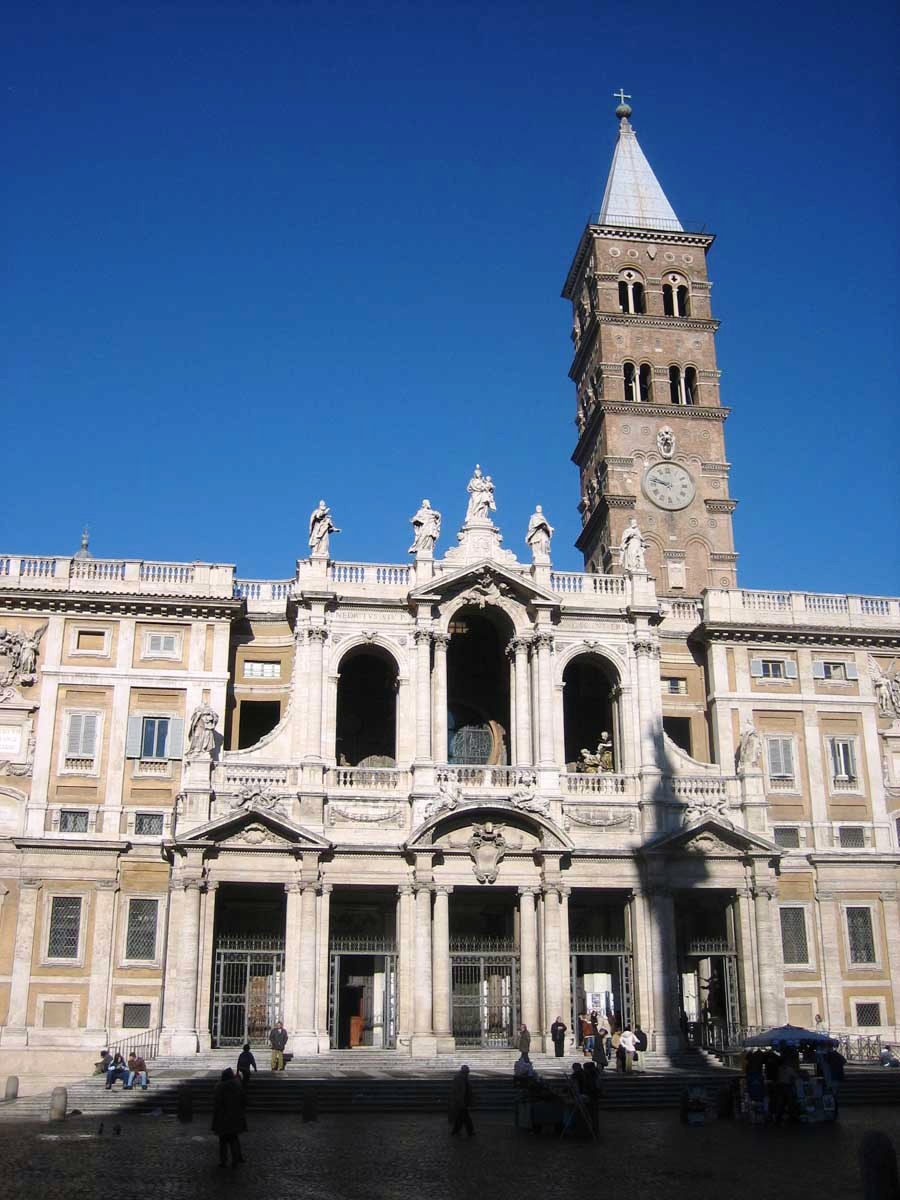
De Santa Maria Maggiore staat op het terrein van een tempel die gewijd was aan de godin Cybele. Volgens een 13e-eeuwse legende werd de eerste kerk hier gebouwd door Paus Liberius (352-66), op de plaats waar de Heilige Maagd Maria aan hem verscheen. De legende gaat dat de Maagd verscheen aan paus Liberius op 4 augustus 358 en hem de opdracht gaf om een kerk te bouwen op de Esquilijn. Archeologisch bewijs geeft echter aan dat de kerk waarschijnlijk gebouwd werd rond 400 en voltooid werd onder Paus Sixtus III (432-440). Dit was de tijd dat kerken, gewijd aan Maria, overal in het rijk gebouwd werden, ingegeven door een steeds populairdere devotie tot de Maagd en de officiële toelating van haar titel “Theotokos” (Moeder van God) op het Concilie van Efeze in 431.
Santa Maria Maggiore stands on the site of a temple to the goddess Cybele. According to a 13th-century legend, the first church was built here by Pope Liberius (352-66), on the site of an apparition of the Blessed Virgin Mary. The legend has it that the Virgin appeared to Pope Liberius on August 4, 358, instructing him to build a church on the Esquiline Hill. Archaeological evidence, on the other hand, indicates that the church was probably first built in the early 400s and completed under Pope Sixtus III (432-440). This was a time when churches dedicated to Mary were beginning to spring up all over the empire, prompted by an increasingly popular devotion to the Virgin and the official acceptance of her title “Theotokos” (Mother of God) at the Council of Ephesus in 431.









 Travel the world